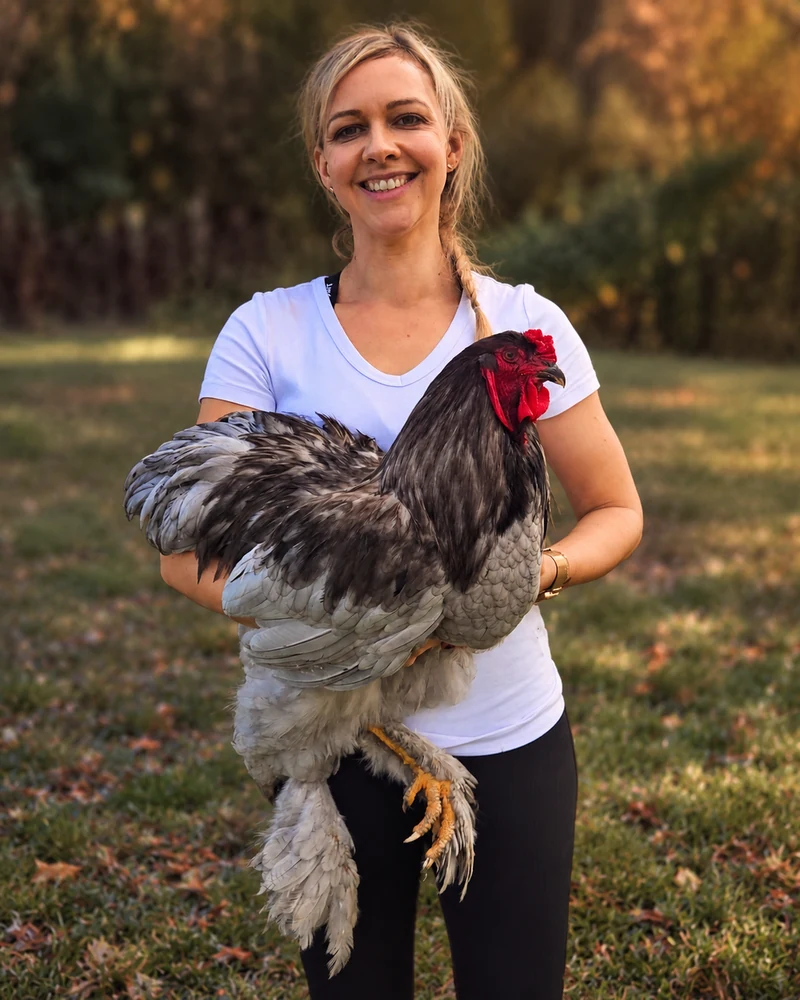
Five clans, hidden genes, and why the future of Brahma colour is being decided now
“Chicken math” is the joke every keeper knows: you set off to collect three hens and come home with seven. You—or your husband—build a coop for eight, and by August it is full to the brim. Nobody in this hobby has ever added up correctly, whether by accident or to sneak in a few extra chickens.
I am an economist by training, with a background in innovation and biology. Professionally, I develop tools and methods to help people make decisions when they do not have all the necessary information, particularly when the results will only become visible many years later. Recently, I started applying these methods to counting chickens. It is a surprisingly good fit.
The selection problem
A breeding season is one long, continuous selection problem. From hatch onward, you stand in front of a pen of young birds and decide who stays. There is only so much space, feed and winter housing, and often all you have to work with is a chicken’s juvenile appearance.
Therein lies the problem: what you can see does not tell you everything a bird is carrying. A pullet you almost cull might be the only bird in the pen carrying the hidden gene you have been chasing for two years. You make a permanent decision with limited evidence and discover whether you were right only a year later, if at all. That is precisely the kind of problem humans are worst at solving.
Why Europe matters
More new Brahma colours seem to be under development in Europe than anywhere else in the world, and I do not think that is an accident. Partly it is density: breeders, shows and clubs are often within a day’s drive of one another, so birds and ideas travel.
Europe does not have one fully uniform poultry standard that plays the same role in every country as the American Poultry Association’s Standard of Perfection. National organisations maintain their own standards and lists of recognised varieties, while the Entente Européenne (EE) brings these together and gradually harmonises them. In general, a fragmented standards landscape hinders innovation. In poultry, it may have quietly helped, because a new colour that gets nowhere at one door can knock (peck) at another.
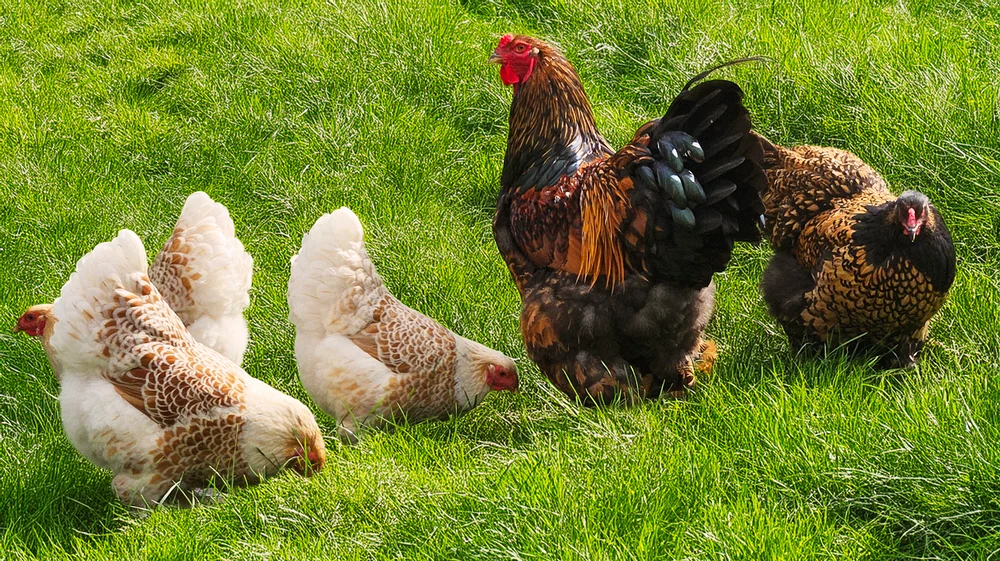
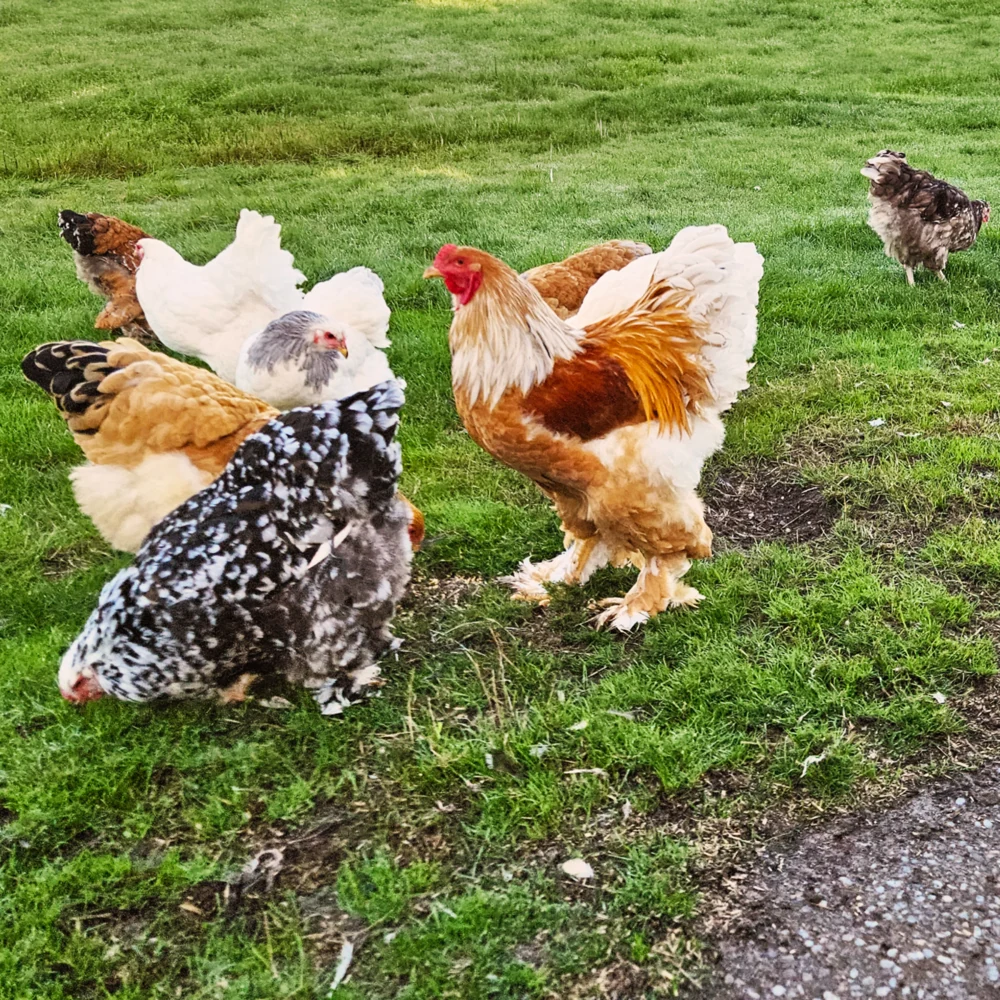
The American Standard recognises only three varieties of large Brahma: Light, Buff and Dark.1 The EE list for large fowl dated March 2026, by contrast, lists seventeen Brahma varieties, although not all are recognised in every individual country.2 Europe has many more colours in development, but it also has a proliferation of hobby names. In my own pens, the gold, black and white laced bird I am working on is called Tollbunt internationally, but in Dutch it is widely called “porselein,” a name also applied broadly to white-tipped varieties. Elsewhere, “porcelain” usually means mille fleur with lavender added. One name can refer to different appearances, and one appearance can arise from more than one genetic combination. Multiply that by a dozen emerging colours and we have a mess. It is a fixable one, and Europe is the obvious place to fix it. The first clear, well-documented description often becomes the one everybody else copies.
The problem with Brahmas
I fell in love with Brahmas because of their proud stature, commanding presence, graceful manner, docile personality and enormous colour potential. After I started breeding them, however, I understood why they were once the breed of nobility. There is something rather frivolous about keeping an animal with high feed costs before it begins laying, a great many feathers, sensitivity to heat, and a tendency toward broodiness.
All of this affects the economics of breeding. Brahmas develop slowly, so both colour and type take time to judge. The longer you keep every possible candidate, the larger the feed bill becomes. A one-in-sixteen result looks perfectly achievable on paper, but it can take much longer than expected to appear even once. If you do not account for that, you may conclude that the genetics or calculation was wrong when the real problem was that you did not hatch enough chicks. Size creates another barrier: new colours often appear in bantams first, followed by an attempt to bring the colour into large fowl. More on this below. Overall, it seems as if breeding is a very slow game (luckily, so is standardisation).
A clan-approach to organising genes
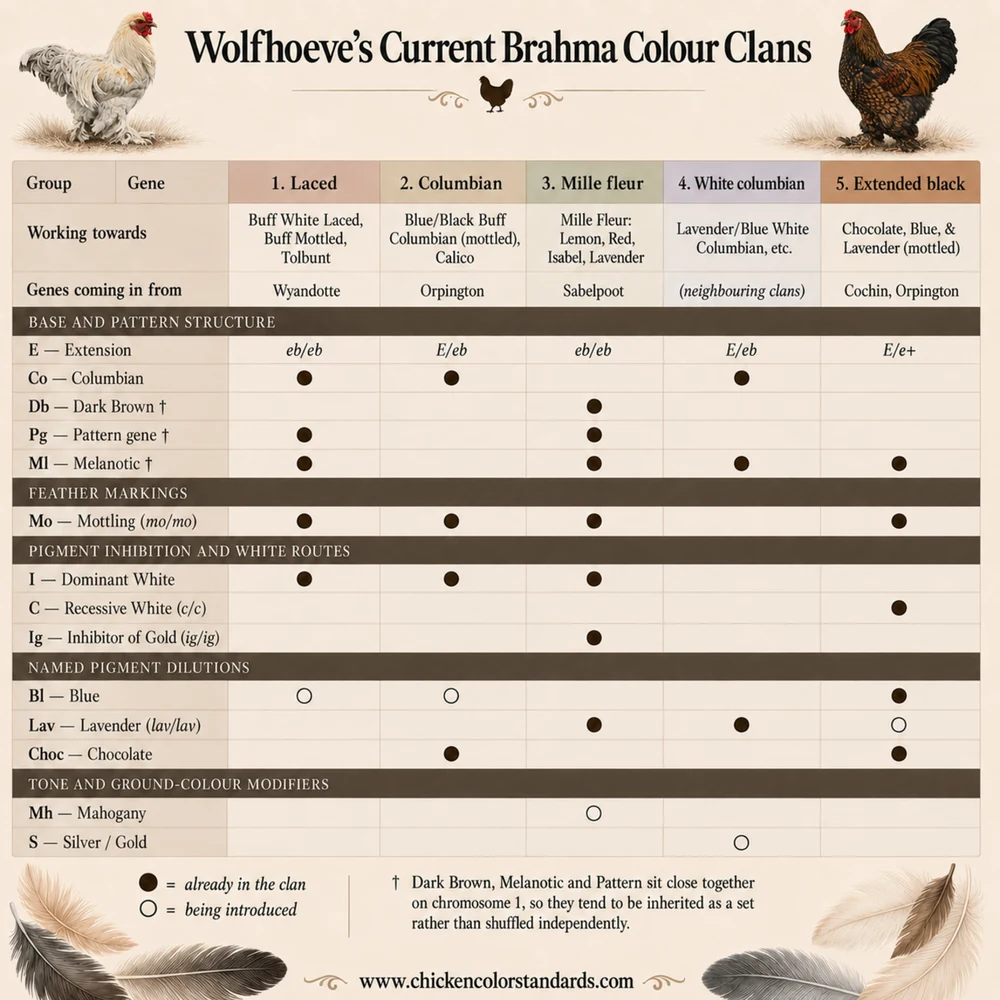
Wolfhoeve is our property in Beekbergen, on the edge of the Veluwe, where I put some of these theories into practice. This often means producing a surprise that reveals that something I thought would happen was completely wrong. We have five breeding pens organised on a genetic basis. I call them “clans” because I use elements of traditional clan breeding: related female lines remain together, while roosters are rotated according to pedigree. Importantly, for me, a clan is not one colour, but rather a shared genetic foundation from which several colours can emerge. This means that work done for one variety can pay off for its neighbours. A bird that is wrong for one pen may be exactly what another pen needs. Pattern Gene (Pg), for example, would disturb the purity of my Columbian genetics in Clan 2 but would reinforce the lacing genetics in Clan 1. The accompanying diagram shows the present organisation.3
This clan system has several practical advantages:
The same gene can do different jobs. Melanotic appears in four of the five clans. For example, in Clan 1 it helps build lacing; in Clan 3 it helps draw the black spangle on a mille fleur feather. One gene, multiple outcomes, depending on what else the bird carries.
Recessive genes can be concentrated and contained. Mottling (mo), Lavender (lav) and Inhibitor of Gold (ig) are all recessive in Clan 3. An outcross can make them disappear for a generation, only for them to return among the grandchildren. Every outcross in that clan is therefore planned at least two generations ahead. Clan 4 carries fewer hiding genes, which is much of why it can move faster.
The two roads to white remain separate so they can be cleanly explored. Clans 1, 2 and 3 use Dominant White, which shows with one copy. Clan 5 uses Recessive White, which needs two copies and can remain hidden. The birds may look almost identical, but the genes work in opposite ways. Assuming that white is simply white is one of the more expensive mistakes in this hobby.
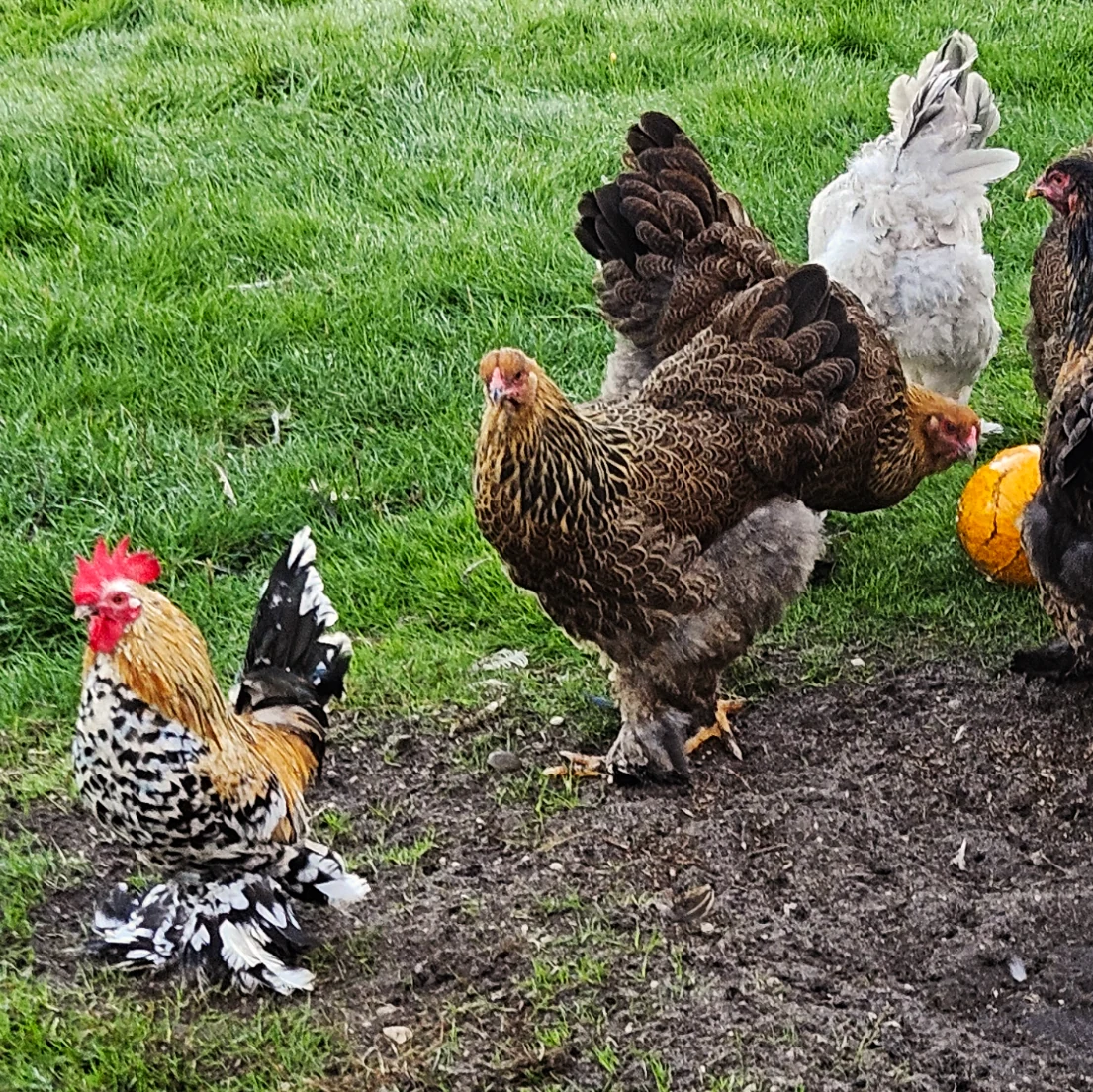
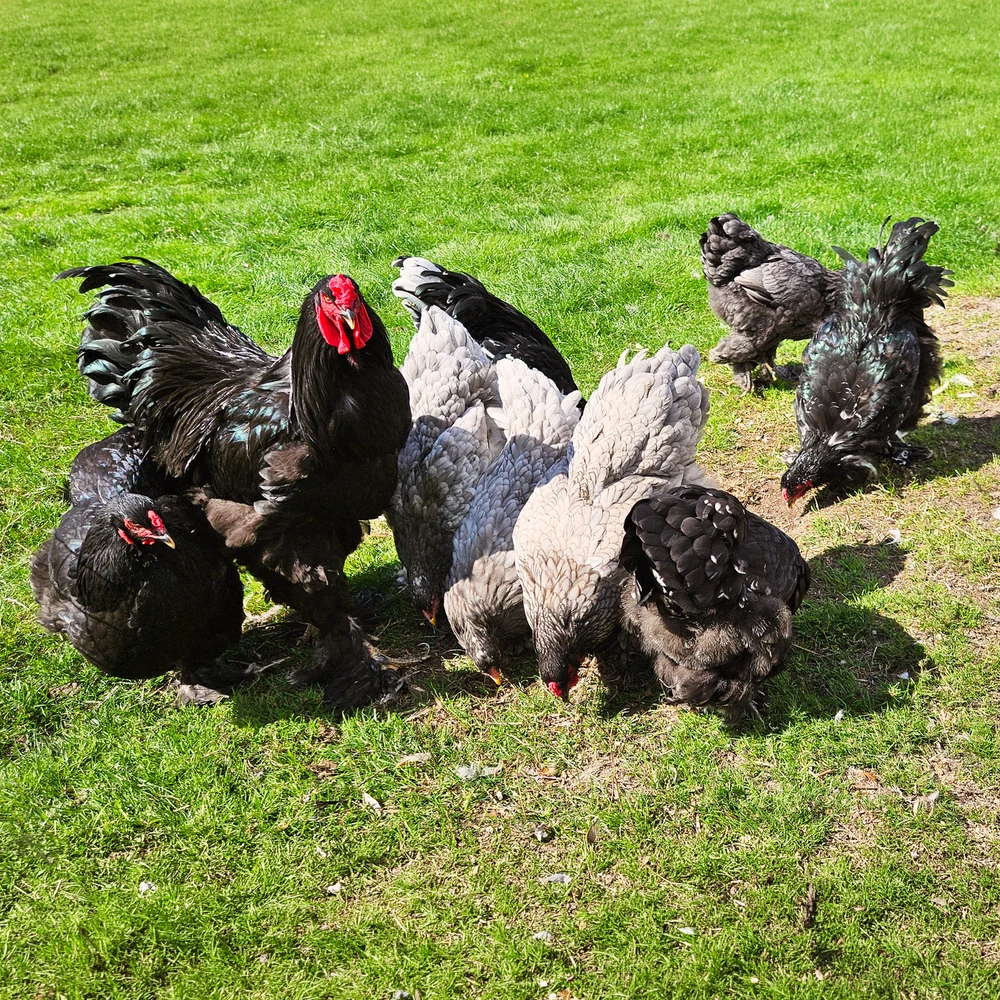
Drowning in Chicken Math – the Genetics of Type and Colour
Some of the clans are non-Brahma, as you can see in the figure: buff white laced Wyandotte (Clan 1), chocolate mottled Orpington (Clan 2), lemon, red, and isabel porcelain Sabelpoot (Clan 3), and bobtail Cochin (Clan 5) each brings a particular gene not yet available or widespread in the Brahma. For example, the Wyandotte brings in pure genetics for buff white laced including an organised form for dominant white. These also have advantages: for example, the Chocolate (choc/choc) Mottled (mo/mo) Orpington offers a sex-linked shortcut, where upon crossed with a Chocolate Mottled brahma hen will make every female chick Chocolate Mottled, and every male chick is Black Mottled while carrying Chocolate. One hatch produces two clearly defined groups for the next step. The Sabelpoot introduces a new gene to the brahma, Db, in a way that has been referred to as a “genetic hack” due to its tendency to drag genes Pg and Ml together with it, influencing the probabilities of the outcomes and thereby accelerating the establishment of the mille fleur in Brahma – more on this below.
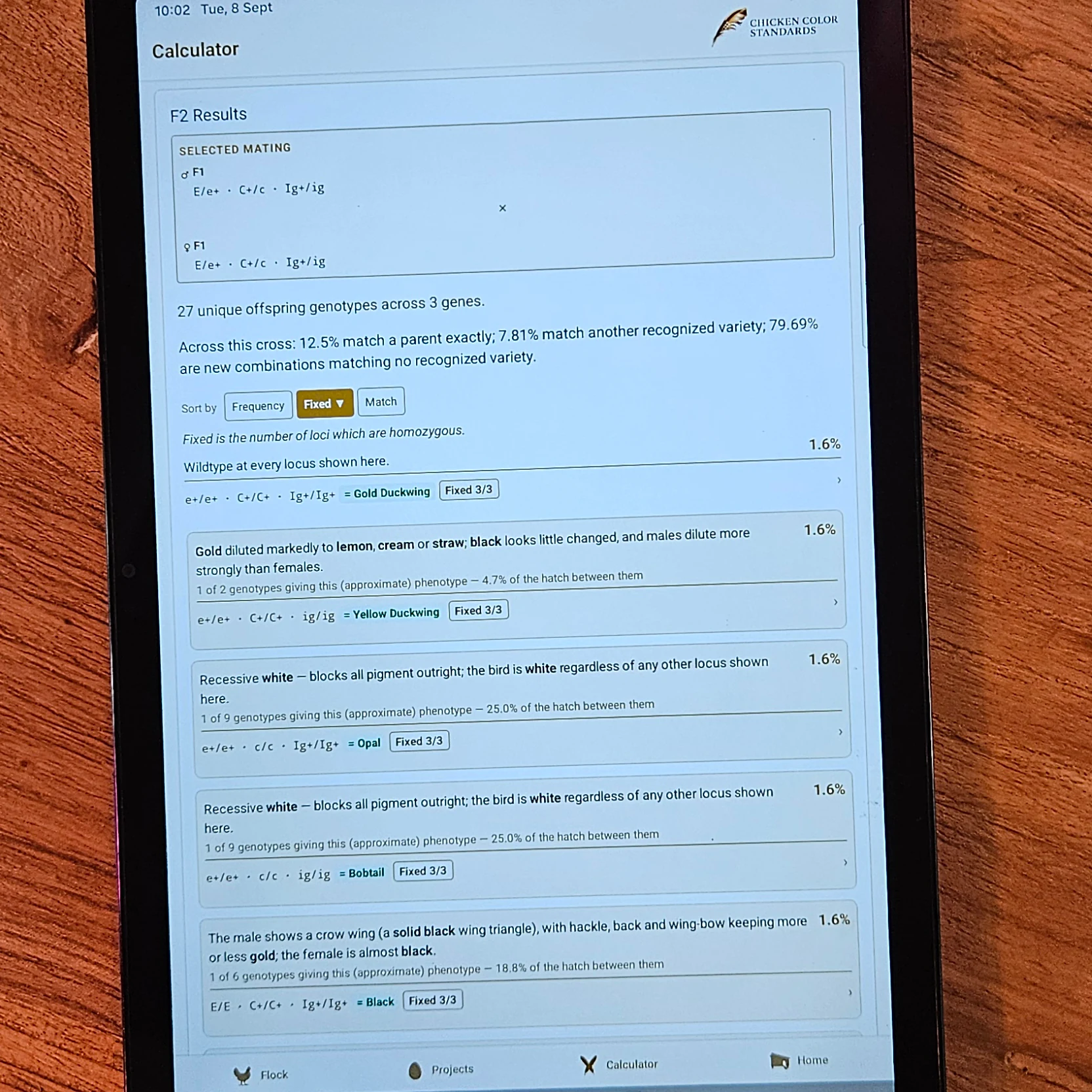
For Clan 5, a Bobtail Cochin provides a clean route to both Recessive White (c/c) and the wild-type base (e+/e+). Crossing them to my black rooster on the E-base creates opportunity for these homozygous recessive white to reappear again over two generations. As a spillover effect, I also expect this clan to produce colours that are not my original goal but sit close to other recognised varieties on the e+ base. If one of these genetically similar varieties is only a step away, I can split off a new group rather than discard useful work because it was not in the original plan – see Figure 1, where I might expect to find opal, gold duckwing, yellow duckwing, and bobtail.
There is a constant debate in the chicken world about trade-offs between breeding decisions that prioritise colour, and those that maintain (or recover) true breed type. The obvious challenge when crossing two breeds is how to recover the Brahma type, via “backcrossing to Brahma,” but this can mean two different things, and only one keeps the inbreeding reduced. Inbreeding measures the chance that a chick receives two gene copies that trace back to the same ancestral copy. Starting with a 50% Brahma cross (i.e., the hybrid offspring in F1 (Generation 1) from Brahma x Wyandotte (Clan 1), Orpington (Clan 2), Sabelpoot (Clan 3), and Cochin (Clan 5)), repeated backcrossing to any 100% Brahma produces chicks with an expected Brahma ancestry of 75%, 87.5% and 93.8% in each subsequent generation. That progression is the same whether I repeatedly use the same original Brahma mother/father, or bring in a different, unrelated Brahma each generation. The numbers that do change are the inbreeding — if I keep returning to the same original parent, the inbreeding coefficient rises to approximately 25%, 38% and 44% over those three backcrosses. Using different, sufficiently unrelated Brahmas produces the same expected recovery of Brahma ancestry while creating very little new inbreeding.
My mille fleur project is an example of why that outcross has to wait when there is a colour goal. It starts with a lemon mille fleur Sabelpoot crossed with a gold double-pencilled Brahma, and the pattern rests on double copies of three critical genes: Pg, Ml and Db. In my case, only Pg is uncomplicated, because both parents carry it going in. Ml and Db come from the Sabelpoot alone, so backcrossing to Brahma at F1 would begin diluting them out before they were ever secured. F1 siblings therefore must produce F2, and selected F2 siblings produce F3, which takes inbreeding to roughly 25% and then 38% — exactly what the first two backcrosses to one Brahma would have cost. The same price, paid for colour instead of type. What makes it worth paying is that Ml and Db sit about ten map units apart on the same chromosome 1 and tend to travel together: an F1 bird passes them as a pair in around 45% of its gametes5 rather than 25%6, so roughly one F2 chick in five inherits the pair from both parents instead of one in sixteen.
Going into F3, once that combination is fixed (Pg/Pg, Ml/Ml, Db/Db) the economics of the project changes. At that point I want to stop tightening the same family and begin using different, sufficiently unrelated Brahmas—ideally from branches in which useful genes are already present—to recover type without continuing to increase inbreeding. Here, 75%, 88% and 94% arrive without the inbreeding stacking behind them: waiting has cost me two generations, not inbreeding. It also means I can hatch far fewer birds to find one that is Db/Db Ml/Ml Pg/Pg, before I begin selecting for Brahma type.
The practical rule is therefore not simply “backcross to Brahma.” It is: first concentrate the genes I cannot afford to lose for up to three crosses, then recover Brahma type through unrelated Brahma branches. Note that it does not guarantee that Brahma type has returned; breed percentage and type are not the same thing. It does, however, provide several generations in which to select toward colour and type at the same time, assuming some chicks will have more “brahma-ness” than others. I do not see those as competing goals in my own operation. Breed recovery is now included in the app’s Roadmap feature, so this part of the project can be considered alongside the colour goal.
We can also zoom in on the genetics of particular components that help define “Brahma”. Across the four partner breeds, comb and foot feathering behave predictably once you know the rules: Cochin, Sabelpoot, and Orpington are all single-combed, which is recessive, so crossing any of them with the pea-combed Brahma gives pea-combed F1s every time, while Wyandotte's rose comb is a separate dominant gene that doesn't lose to pea but combines with it into walnut comb instead.
Foot feathering follows the same "does the partner already have it" logic — Cochin and Sabelpoot are already feather-legged like the Brahma, so F1s keep full feathering, whereas Orpington and Wyandotte are clean-legged, so their F1s get just one dose of feathering genes from the Brahma side and come out more lightly and unpredictably feathered, needing the same kind of multi-generation fixing as the colour work. Size adds one more layer for all my donor breeds except for Giant Orpington, as the others will need to be bred towards a consistent target over subsequent generations.
Where I needed decision support
Once the clans were established, I realised that they also produced an enormous number of decisions given all the complexity I had created. Every hatch contained chicks that were right for their clan, chicks that were mostly wrong there but slightly valuable one pen over, and chicks that were hiding something that only their adult plumage or offspring would reveal. Choosing well meant holding too many things in my head at once. This led to paralysing decision fatigue, which is the honest origin of the tools I began developing after meeting fellow club member Berend Beekhuis at my first Brahma club meeting this year.
Berend created chicken-colors.info, an open and encyclopaedic source on colour varieties that combines phenotype descriptions with genotype information from the internationally-renowned Kippenjungle calculator, together with contributions from other experienced experts in the poultry world. Kippenjungle has been an important reference for Dutch and international colour genetics for a generation. I am sincerely grateful to Berend for building this resource and for answering my many amateur questions with such openness and kindness from the very beginning.
My confusion about the breeding setup I had created—and my need to connect all those questions to my own flock— first led me to develop the tools at http://chickencolorstandards.com. The platform builds on the phenotype work at chicken-colors.info, the genotypes used by Kippenjungle, published scientific literature, and guidance and corrections from experienced breeders. It is currently available in English because precision is difficult enough to maintain in one language. At its simplest, the tool does two jobs: it helps compare detailed differences between two colour varieties, and helps to calculate what a cross between two recognised varieties may produce, where I also try to enlighten others on the genetics and math behind the cross.
As these tools solidified, the need to store the genetics of my own flock and work with them more interactively became more obvious, which persuaded me to develop a free-to-start app for Android and iPhone (iOS) called Chicken Genetics Calculator. At its simplest, the website can calculate an answer to a breeding question; the app connects that answer to the individual chickens that produced it, and thereby also the genes and generations that comprise the gene pool of one’s entire flock. This is obviously more realistic, since in reality a breeding project lasts much longer than a calculation. A note saying “this rooster carries Chocolate” is useful to a person, but it cannot safely be reused unless we know which chicken, which genetic locus, and the degree of certainty of the information. Further, a statement such as “Chocolate is sex-linked,” “mottling is recessive,” or “Db and Ml tend to travel together” has to be turned into structured data before a program can use it consistently.
The larger contribution of the app is in the hardcoding of the data, including within one’s actual flock. The genetic record stays with the chicken, together with its phenotype, pedigree, clan, photographs (categorised by stage of plumage development), and breeding history. Each rule is tied to a locus, an inheritance pattern, its effect and its source. Genetic information can be marked as confirmed, inferred or still unknown, because those are not the same thing.
The records then become a plan where saved birds can be placed into a proposed cross, the expected offspring can be compared with a target variety, and the actual hatch can be linked back to its parents. Chicks that match the appearance equivalent to the desired (intermediary) genotype (whether this is visible at hatch, or as the chicken matures) are selected as the starting point for the next mating.
One novel contribution is the calculation of a roadmap that moves from one’s particular flock to a goal colour. The app can show which parts of a target appear to be present (what your flock contains — “You have this!”), which remain uncertain (what you need to still confirm) and what may still be missing (what you can buy, in terms of actual colour varieties, depending on how easy it is to acquire them). It can suggest useful matings and the kind of offspring worth retaining, while grouping birds that are expected to look alike even when their hidden genotypes differ. The app also now includes breed recovery in the Roadmap feature and recommended pairings per pen for the most easily achievable colors.
Breed recovery puts the colour goal alongside documented breed requirements, so I can keep the work of recovering Brahma type in view as a project develops. Breed ancestry and type remain different things; the birds still have to be assessed in front of the pen.
The recommended pairings per pen make this useful at the level where I organise my own breeding. I can consider which colours are most readily achievable from the birds in each pen and use the suggested pairings when deciding the next matings. The flock records and saved plans then keep those choices connected to the parents and offspring over time.
In a nutshell, these efforts have been hardcoding accepted genetics knowledge and economic modelling together, using them as a comparison tool between varieties, a method to calculate distribution of genetic outcomes, and a recommendation for future actions. The app remembers, calculates and keeps uncertainty visible. Remember, however, that this is a decision support tool, not a replacement for the breeder’s own experience and opinion. The tools can help to teach the users about genetics and probabilities, and also eventually contribute to one’s own knowledge and decision-making ability. The final selection still happens in front of the pen, surrounded by a huge flock that looks almost completely identical.
Why the next few years matter
New chicken keepers are not less curious than the breeders before them. They are digitally literate and begin in different places: when they have a genetics question, they are increasingly likely to ask an AI assistant like ChatGPT, and telling them to begin somewhere else will not change that. The useful question is what information they will find when they arrive: if the underlying data in a model are poor, the methods unclear or the distinctions between fact, inference and experience have been erased, this digital fluency only helps someone reach the wrong answer faster and with more certainty. Perhaps you have experienced it already, but ChatGPT is far too often badly wrong regarding chicken colour genetics, with no means of actually improving the accuracy of the answer without going in and building the model from the ground up (hence, what I did over the last three months). At the same time, much of breeders’ knowledge remains scattered through notebooks, club articles and memory – what is the best way to take this up into useful models and tools for the future? I personally don’t have the answer to that question.
As an inspirational last note: while the chicken genome itself has been extensively sequenced7, and many major colour genes are known, colour genetics is far from completely understood. Many gene interactions remain to be discovered, particularly when we consider a chicken as a “whole” consisting of many interacting parts – epistasis, or the interaction between genes, can only begin to describe this, as the human interpretation of what we see in front of us. Given the long history humanity has with chickens, the next few years may propel us into a new era of understanding of our feathery friends, and we are at a critical transition point to ensure that the way this happens is scientifically-based and useful in on-the-ground practice. Hopefully my platforms can motivate people with critical insights to connect this with DNA sequencing and linkage analysis, although I am not the right person to say how this should happen.
I have kept Brahmas for a few years, not decades. I can offer ways to structure and test information; experienced breeders can contribute what no calculation can create: knowledge of real lines across generations.
And I am still terrible at chicken math. I once went to look at three Brahma chicks.
Dr. Anne Rainville breeds giant Brahmas at Wolfhoeve in Beekbergen and writes Chicken Color Standards (chickencolorstandards.com) and the associated app for Android and iPhone (iOS), a free reference and set of tools for chicken colour genetics.
Endnotes
-
American Poultry Association. Accepted Breeds & Varieties.
-
For a closer look at the European differences, the EE publishes a detailed table of recognised large-fowl breeds and varieties, including names and recognition by country. See Entente Européenne, Listing of Large Fowl Breeds and Colors Accepted in Europe (31 March 2026; Excel workbook).
-
I should be clear about the stage of the work shown here, since I’m not the authority on chicken colour genetics, or an expert on the Brahma breed. Most of my project birds are still in F1 or F2. What I can contribute is a framework: bringing genetics, records and breeding decisions together in a form that can be tested over time.
-
Credit is due to Berend Beekhuis for his practical research into the genetic background of bobtail. He describes breeding tests carried out in 2025 with bobtail and recessive white Cochin bantams. From the observed ratios among approximately 25 offspring and further intercrosses, he concludes that bobtail is probably a variant of recessive white. These breeding results provide valuable indications, but targeted DNA research is needed to confirm the genetic relationship at the molecular level and identify the variant involved. See Beekhuis, B. (2025), Bobtail.
-
Gametes are reproductive cells: sperm cells in a rooster and egg cells in a hen. They contain half the genetic material and pass it on to the chick.
-
Recombination-frequency estimates: Carefoot WC (1987) Test for linkage between the eumelanin restrictor (Db) and the eumelanin extension (Ml) genes in the domestic fowl. British Poultry Science 28:69–73. Note that this was a relatively small sample size, of 31 female chicks, however Carefoot’s classical linkage mapping on chromosome 1 has been fully corroborated and confirmed at the molecular level by modern genomics. Hopefully the results of my crosses can also contribute to the chicken colour literature at some point in the future.
-
International Chicken Genome Sequencing Consortium (2004) Sequence and comparative analysis of the chicken genome provide unique perspectives on vertebrate evolution. Nature 432:695–716. doi:10.1038/nature03154